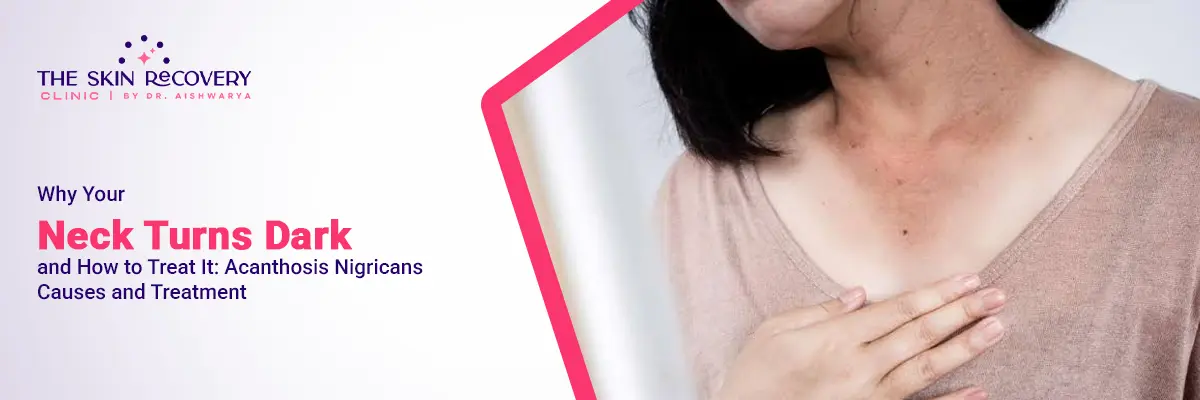
Quick Answer
A dark neck isn't always the result of tanning or poor hygiene. Sometimes, a skin condition called acanthosis nigricans causes the skin around your neck to turn dark, thick and velvety. It often has a connection with insulin resistance, weight gain or hormonal changes. The right treatment depends on what's causing the skin to darken.
Key Facts
- Common areas: Neck, underarms, groin and other skin folds.
- Main causes: Insulin resistance, hormonal changes, excess weight and genetics.
- Early signs: Dark patches, thickened skin and a soft, velvety texture.
- Treatment: Managing the underlying cause, prescription creams and selected dermatological procedures.
Why Your Neck Turns Dark and How to Treat It Before the Problem Gets Worse
You notice a dark line around your neck while looking in the mirror. You wash it, scrub it and even try a few home remedies. Nothing changes. The skin still looks darker than the rest of your body.
This happens to many people. What looks like stubborn dirt may actually be acanthosis nigricans, a condition that affects the colour and texture of your skin.
The important thing is to find out why the skin has changed instead of trying different creams without knowing the cause.
Understanding Acanthosis Nigricans
Acanthosis nigricans is a skin condition that causes dark, thick patches, mainly in areas where the skin folds.
The back of the neck is one of the most common places to notice these changes. The skin may feel slightly raised or velvety when you touch it.
It can affect children, teenagers and adults. Although the patches usually aren't dangerous themselves, they can sometimes point towards an underlying health problem.
Common Causes of Dark Skin Around the Neck
There isn't one single reason behind every dark neck. Doctors look at several factors before recommending treatment.
Insulin Resistance
One of the leading black neck causes is insulin resistance.
When your body stops responding properly to insulin, insulin levels may rise. This can encourage skin cells to grow faster, making certain areas thicker and darker.
Hormonal Changes
Hormonal conditions such as polycystic ovary syndrome (PCOS) can contribute to neck darkening. Some thyroid and other hormonal disorders may also play a role.
Weight Gain and Genetics
People carrying excess body weight have a higher chance of developing insulin resistance. However, slim individuals can also develop acanthosis nigricans.
Sometimes, the condition runs in families.
Medications
Certain medicines, including corticosteroids and some hormonal treatments, may contribute to skin darkening.
Early Signs and Symptoms You Shouldn't Ignore
The skin doesn't usually turn dark overnight. Changes often begin slowly and become more noticeable over time.
Common acanthosis nigricans symptoms include:
- Brown, greyish or black patches around the neck.
- Skin that feels thicker than usual.
- A soft, velvety surface.
- Similar patches around the underarms or groin.
- Small skin tags near the affected area.
These changes usually develop without pain, although some people experience itching.
The Link Between Acanthosis Nigricans and Insulin Resistance
A dark neck can sometimes be an early warning sign of insulin resistance.
This doesn't mean everyone with dark neck patches has diabetes. However, doctors often check blood sugar levels when they suspect acanthosis nigricans.
People with prediabetes may develop these patches before noticing other symptoms.
That is why treating the skin alone may not solve the problem. If insulin resistance is involved, it also needs medical attention.
Acanthosis Nigricans vs Hyperpigmentation
Not every dark patch is acanthosis nigricans.
Ordinary hyperpigmentation changes the skin's colour. Sun exposure, friction, irritation and previous inflammation can cause it.
Acanthosis nigricans usually affects both colour and texture. The skin becomes darker and noticeably thicker.
Understanding this difference helps prevent unnecessary treatments that may irritate the skin further.
How Doctors Diagnose a Dark Neck
A dermatologist usually starts by examining the affected skin.
They may ask about recent weight changes, medications, family history and other symptoms.
Depending on the findings, the doctor might suggest:
- Fasting blood sugar testing.
- HbA1c testing.
- Hormonal tests when necessary.
- Additional investigations for unusual or sudden skin changes.
These checks help identify whether a medical condition is contributing to the pigmentation.
Dark Neck Treatment and Available Skin Procedures
The best dark neck treatment depends on the reason behind the discolouration.
If insulin resistance is responsible, managing blood sugar and weight, when appropriate, may help the patches improve.
A dermatologist may also recommend certain treatments for the affected skin.
- Prescription creams: Retinoids and other prescribed creams may help reduce thickening and improve the skin's appearance.
- Chemical peels: Selected chemical peels may improve uneven pigmentation and rough texture. They aren't suitable for everyone.
- Laser treatment: Certain laser procedures may help with stubborn patches after a proper skin assessment.
Avoid rubbing the neck aggressively or applying lemon juice and harsh bleaching products. Irritation can make pigmentation worse.
Skin Care Habits That May Help
Simple daily habits can support your treatment.
Wash the neck gently, use a suitable moisturiser and avoid tight collars that repeatedly rub against the skin.
Regular exercise and a balanced diet may help when insulin resistance or excess weight contributes to the condition.
If the darkening develops suddenly, spreads quickly or appears alongside unexplained symptoms, consult a doctor promptly.
Getting the Right Help for Persistent Dark Neck Patches
Dark patches shouldn't leave you guessing about your health. A skin examination can help separate ordinary pigmentation from acanthosis nigricans and other conditions.
At The Skin Recovery Clinic, you can seek a dermatology consultation for dark neck concerns, understand possible causes and discuss treatment options suited to your skin.
Frequently Asked Questions
1. Does acanthosis nigricans always mean diabetes?
No. It can occur without diabetes, although insulin resistance is a common cause.
2. Can dark neck skin disappear with treatment?
Yes, the patches may fade when the underlying cause improves. Some cases take longer.
3. Is acanthosis nigricans contagious?
No. It cannot spread from one person to another.
4. Can chemical peels treat a dark neck?
Chemical peels may improve pigmentation, but they don't correct underlying hormonal or metabolic problems.
5. What medical tests may be needed for acanthosis nigricans?
Doctors may recommend HbA1c, fasting blood sugar or hormonal tests depending on your symptoms.

 Gauri Sharma
 Gargi Mohanty
 Dr. Tapas Mitra
 Ruhan Kumar
 Satya Pattnaik
