Quick Answer
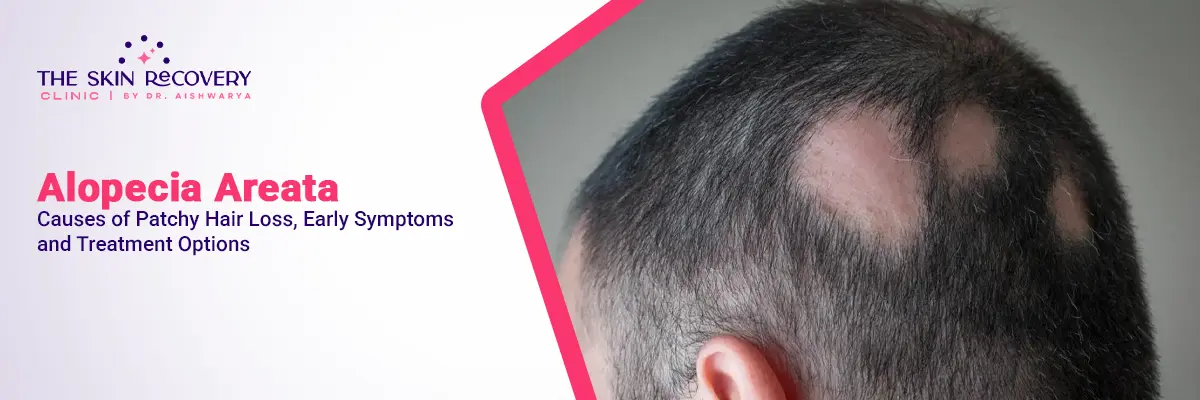
Alopecia areata is an autoimmune condition that causes sudden, round patches of hair loss on the scalp, beard, eyebrows, or other body areas. It develops when the immune system mistakenly attacks healthy hair follicles. Hair can grow back naturally in some cases, while others need medical treatment. Early diagnosis helps dermatologists identify the condition and choose suitable treatment options.
Key Facts
- Main Cause: An autoimmune reaction attacks hair follicles and interrupts normal hair growth.
- Early Symptoms: Small, smooth bald patches appear suddenly, usually without pain or redness.
- Affected Areas: Hair loss can occur on the scalp, beard, eyebrows, eyelashes, and body.
- Treatment Options: Corticosteroids, minoxidil, and other prescribed medicines may support hair regrowth.
Alopecia Areata: Causes of Patchy Hair Loss, Early Symptoms and Treatment Options Explained
Finding a bald patch while brushing your hair or looking in the mirror can feel worrying. Sometimes, the patch appears overnight without itching, pain, or any warning.
Alopecia areata is one possible reason behind sudden patchy hair loss. Unlike regular hair thinning, this condition often leaves clearly defined, round bald spots.
It can affect children and adults. Although the condition doesn't usually damage hair follicles permanently, hair loss may return even after successful regrowth.
Understanding Alopecia Areata and Its Effect on Hair Growth
Alopecia areata develops when the body's immune system mistakenly targets hair follicles. This reaction disrupts the natural hair growth cycle and causes hair to fall out.
Most people notice one or two small patches initially. Others develop several patches that gradually join together.
In more severe cases, people may lose all scalp hair, known as alopecia totalis. When hair loss affects the entire body, doctors call it alopecia universalis.
The condition isn't contagious and doesn't spread through physical contact.
Early Symptoms of Alopecia Areata
The most noticeable alopecia areata symptoms involve sudden hair loss in small, circular areas.
Common warning signs include:
- Smooth, round bald patches on the scalp.
- Sudden beard or eyebrow hair loss.
- Short, broken hairs around affected areas.
- Small dents or pits on fingernails.
- Mild itching or tingling before hair falls out.
Alopecia Areata on the Scalp
Scalp patches usually appear smooth without obvious scaling. Hair surrounding the patches may look completely normal.
Some people notice tiny hairs shaped like exclamation marks near the edges. Dermatologists recognise these as a possible sign of active alopecia areata.
Common Causes of Sudden Round Bald Patches
The exact alopecia areata causes remain unclear, but researchers have identified several contributing factors.
- Genetic tendency: People with a family history of alopecia areata or autoimmune conditions may face greater risk.
- Immune system changes: The immune system mistakenly attacks growing hair follicles.
- Stress: Emotional or physical stress may contribute to flare-ups in some people, although it isn't a proven direct cause.
- Associated health conditions: Thyroid disorders and certain other autoimmune diseases occur more frequently among people with alopecia areata.
Hair loss doesn't always indicate an autoimmune problem. Fungal infections, traction-related damage, and other scalp conditions can also cause bald patches.
Alopecia Barbae and Hair Loss Beyond the Scalp
Alopecia areata doesn't affect scalp hair alone.
Alopecia barbae refers to alopecia areata affecting the beard. Men may notice one or more smooth patches around the chin, jawline, or cheeks.
Eyebrows and eyelashes can also become thinner or develop gaps.
These changes may affect appearance and confidence, making professional assessment particularly helpful.
Alopecia Areata vs Male Pattern Baldness
Understanding alopecia areata vs male pattern baldness helps explain why treatment approaches differ.
Alopecia areata usually causes sudden, well-defined bald patches because of an autoimmune reaction.
Male pattern baldness typically develops gradually. Hair starts thinning around the temples, hairline, or crown due to genetic and hormonal factors.
A hair transplant may suit selected patients with stable pattern baldness, but it isn't a standard treatment for active alopecia areata.
Diagnosis and Scalp Examination
Dermatologists usually diagnose alopecia areata through scalp examination and medical history.
They inspect bald patches, examine surrounding hair, and check for nail changes.
Sometimes, they use dermoscopy to examine hair follicles more closely. Blood tests or a scalp biopsy may help when the diagnosis remains uncertain.
Alopecia Areata Treatment and Hair Regrowth Options
The best alopecia areata treatment depends on hair loss severity, age, medical history, and previous treatment response.
Common options include:
- Corticosteroid injections: Help reduce inflammation around affected follicles.
- Topical corticosteroids: May encourage regrowth, particularly in children.
- Minoxidil: Sometimes supports hair regrowth alongside other treatments.
- JAK inhibitors: Prescription medicines used for eligible patients with severe alopecia areata.
- Contact immunotherapy: May help selected patients with extensive hair loss.
Treatments such as PRP for Hair Loss and GFC Hair Loss Treatment are sometimes discussed for hair concerns, but evidence for treating alopecia areata remains limited. They shouldn't replace established medical treatment.
Hair Regrowth, Relapses and Follow-Up
Alopecia areata hair regrowth varies considerably. Some people regain hair without medication, while others need several months of treatment.
New hair may initially appear fine or lighter than surrounding hair.
Regular follow-ups help dermatologists monitor new patches and adjust treatment. Early medical advice matters when hair loss spreads quickly.
The Skin Recovery Clinic can be considered for professional guidance on hair loss concerns, diagnosis, and suitable treatment discussions.
Frequently Asked Questions
1. Can alopecia areata go away on its own?
Yes. Mild alopecia areata may improve naturally, although hair loss can return later.
2. Is alopecia areata contagious?
No. Alopecia areata is an autoimmune condition and cannot spread through contact.
3. Can stress cause alopecia areata?
Stress may contribute to flare-ups, but researchers haven't established it as a direct cause.
4. How long does hair regrowth take?
Some people notice regrowth within a few months, while others take longer.
5. Can alopecia areata return after treatment?
Yes. Alopecia areata can return even after complete hair regrowth.

 Gauri Sharma
 Gargi Mohanty
 Dr. Tapas Mitra
 Ruhan Kumar
 Satya Pattnaik
