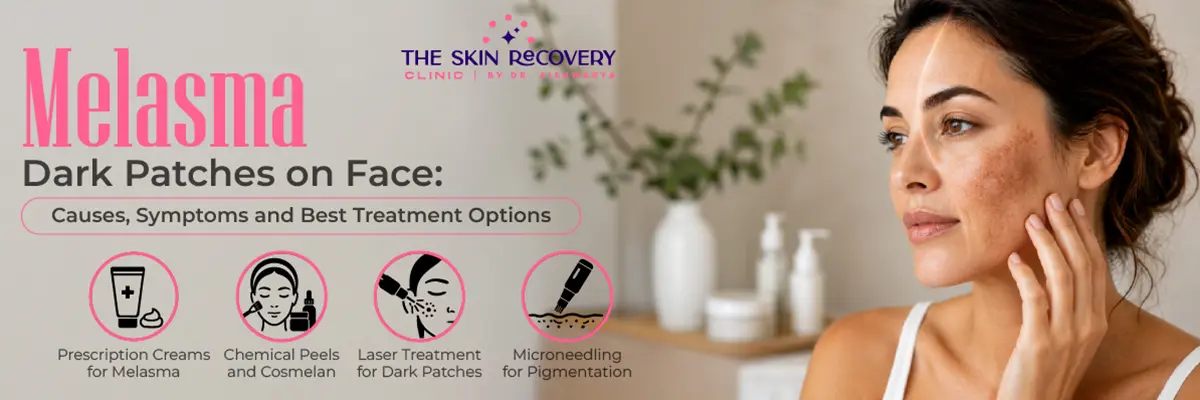
Melasma Dark Patches on Face: Causes, Symptoms and Best Treatment Options
Having brown patches on your cheeks, forehead or upper lip can be frustrating, especially when they just won’t go away. You may notice them after a holiday, during pregnancy or even if you haven’t changed your skincare routine. A lot of people mistake these marks for tanning and start using fairness creams or home remedies. But sometimes, the real reason is melasma. Unlike a regular tan, melasma can stay for months and return after treatment. If you have melasma dark patches on face, finding out why they appeared is more useful than trying random products.
Melasma Dark Patches on Face: Causes, Symptoms and Best Treatment Options That Dermatologists Recommend
Melasma is a pigmentation problem in which certain parts of your skin produce too much melanin. This makes the affected areas look darker than the surrounding skin.
It most often occurs on the cheeks, forehead, upper lip and nose. Sometimes, the patches look light brown; in other cases, they appear dark brown or greyish.
Melasma is different than the usual dark spots because of how it appears. It usually occurs on both sides of the face. For example, you may notice similar brown patches on face around your left and right cheeks.
Melasma isn't dangerous or contagious, but getting rid of it completely can be difficult.
What Causes Melasma on the Face?
People often ask, what causes melasma, especially when the patches appear without warning. There isn't always one clear reason.
Here are the main causes:
- Sun exposure: Sunlight stimulates melanin production. Even short periods outdoors can darken existing patches, particularly without sunscreen.
- Pregnancy: Hormonal changes can trigger melasma during pregnancy. Doctors sometimes call it the pregnancy mask.
- Birth control pills: Some women notice pigmentation after starting hormonal contraceptives.
- Family history: Melasma sometimes runs in families. If your mother or sister has it, your chances may be higher.
- Heat and skin irritation: Heat can aggravate pigmentation in some people. Strong exfoliating products may also leave irritated skin looking darker.
Although dark patches on face female patients experience are often related to hormonal changes, men can develop melasma too.
How Do You Know If Your Dark Patches Are Melasma?
Not every brown mark is melasma. Acne scars, sunspots, and other pigmentation problems can look similar.
Common melasma symptoms include:
- Dark spots on cheeks that gradually spread into larger patches.
- Dark spots on forehead, sometimes extending towards the temples.
- Melasma on nose, especially across the bridge.
- Brown pigmentation above the upper lip.
- Matching dark patches on both sides of the face.
Some people notice dark pigmentation around eyes and cheeks, although pigmentation around the eyes can have other causes.
Melasma usually doesn't itch, hurt, or change the texture of your skin. If you notice bleeding, swelling, or sudden changes, see a dermatologist.
Which Treatments Actually Help Melasma?
Melasma treatment takes time. A cream that works for one person may not work for another, particularly when the pigmentation sits deeper in the skin.
1. Prescription Creams for Melasma
Dermatologists often start with medicines containing hydroquinone, tretinoin, or azelaic acid.
Hydroquinone helps to lighten surplus pigment. Tretinoin supports skin cell renewal, while azelaic acid can help lighten pigmentation.
Some patients are given a combined cream. These medicines need medical supervision, particularly during pregnancy.
2. Chemical Peels and Cosmelan
Chemical peels may help lighten surface pigmentation. A dermatologist chooses the peel according to your skin type and the depth of pigmentation.
Cosmelan is another pigmentation treatment that may suit selected patients. Neither treatment guarantees permanent results, and strong peels can make pigmentation worse.
3. Laser Treatment for Dark Patches
Certain laser treatments may help stubborn melasma, but they are not the first choice for everyone.
Too much heat or irritation can darken the patches further. A dermatologist should discuss the risks before recommending laser treatment.
4. Microneedling for Pigmentation
Microneedling is sometimes used with prescribed medicines for difficult melasma. It may help selected patients, but improper treatment can cause more pigmentation.
Those with concerns about brown patches, melasma or uneven pigmentation of the face can have a discussion at The Skin Recovery Clinic about their skin concerns and the treatment options available.
How Can You Keep Melasma from Returning?
Even when the patches become lighter, sunlight can bring them back. That is why your everyday skincare matters.
- Wear broad-spectrum SPF 30 or higher sunscreen daily.
- Choose tinted sunscreen with iron oxides, which also helps protect against visible light.
- Reapply sunscreen when spending long hours outdoors.
- Avoid harsh scrubs, lemon juice, and unprescribed bleaching creams.
- Follow your dermatologist's instructions instead of changing products every few days.
There is no reliable overnight method for how to remove dark spots on face fast naturally. Protecting your skin and treating the actual cause makes more sense than experimenting with home remedies.
FAQs
1. Why do I have brown patches on my face?
Sun exposure, hormonal changes, and family history may cause melasma. Sunspots and acne pigmentation can also leave brown marks.
2. Can facial melasma disappear without treatment?
Pregnancy-related melasma sometimes fades after delivery. However, other cases can remain for years or return after sun exposure.
3. Which creams work best for facial melasma?
Hydroquinone and prescription triple-combination creams have strong evidence. Dermatologists may also recommend azelaic acid.
4. How long does melasma treatment take?
Some people notice fading within six to eight weeks. More noticeable changes often take three months or longer.
5. How is melasma different from sunspots?
Melasma often forms larger, matching patches on both sides of the face. Sunspots usually appear as separate, smaller marks on sun-exposed areas.

 Gauri Sharma
 Gargi Mohanty
 Dr. Tapas Mitra
 Ruhan Kumar
 Satya Pattnaik
