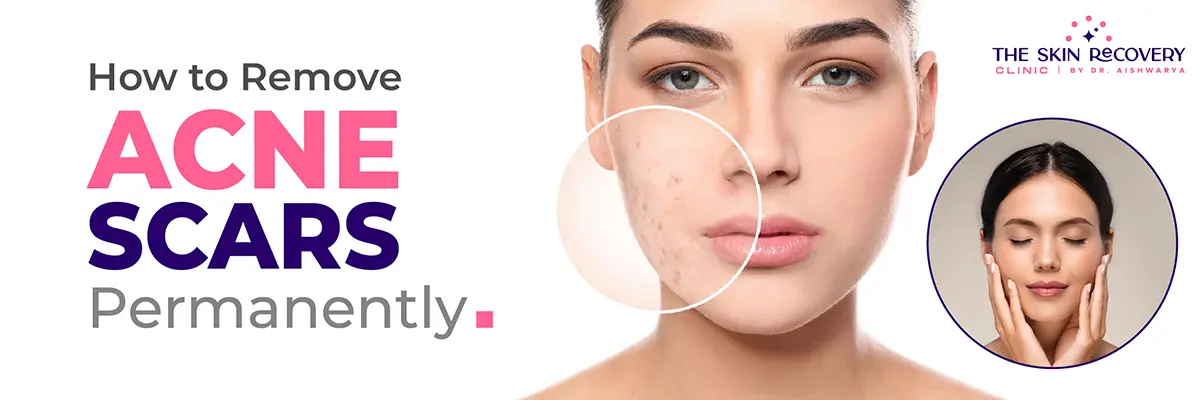
How to Remove Acne Scars Permanently
Acne may settle within a few days or weeks, but the marks it leaves behind can remain for months or even years. This often leads people to search for how to remove acne scars permanently. The right solution depends on whether you have dark acne marks, shallow dents, deep scars or raised scars.
No cream or home remedy can completely erase every acne scar. However, the right skincare routine and professional acne scars treatment can make scars much less visible, smooth uneven texture and improve your overall skin tone.
Are Acne Marks and Acne Scars the Same?
People often use these terms interchangeably, but they are different.
Acne marks usually appear as brown, red or purple spots after a pimple heals. These marks do not change the skin’s texture and often fade gradually.
Acne scars affect the skin’s structure. They may appear as dents, pits, uneven areas or raised tissue. These scars usually need professional treatment because regular creams cannot rebuild deeply damaged skin.
A dermatologist should examine your skin before recommending the best treatment for acne scars. The type, depth and age of the scar all affect the treatment plan.
Common Types of Acne Scars
Understanding your scar type can help answer the question, how to remove acne scars effectively.
Ice Pick Scars
These scars look like small, narrow holes in the skin. They often extend deep into the skin and usually need treatments such as TCA CROSS or punch excision.
Boxcar Scars
Boxcar scars have wider edges and create round or oval depressions. Laser resurfacing, microneedling and chemical peels may improve their appearance.
Rolling Scars
Rolling scars give the skin a wavy or uneven look. They form when scar tissue pulls the skin downward. Dermatologists often treat them with subcision, sometimes combined with microneedling or fillers.
Raised Scars
Raised or keloid scars develop when the skin produces too much scar tissue. Steroid injections, silicone-based treatment or laser procedures may help flatten them.
How to Remove Pimple Marks at Home
Mild acne marks may respond to a consistent skincare routine. When considering acne scars treatment at home, remember that topical products mainly help pigmentation and mild surface irregularities. They cannot remove deep, indented scars.
Useful ingredients may include:
- Vitamin C: Helps brighten dark spots and supports an even skin tone.
- Retinoids: Encourage skin-cell renewal and may gradually improve mild acne marks.
- Niacinamide: Helps reduce redness, control excess oil and support the skin barrier.
- Salicylic acid: Clears pores and gently removes dead skin cells.
- Azelaic acid: May help reduce acne, redness and post-acne pigmentation.
- Sunscreen: Prevents acne marks from becoming darker.
Apply a broad-spectrum sunscreen with SPF 30 or higher every morning. Without sun protection, even an effective treatment may produce slow or uneven results.
Do not combine several strong acids or active ingredients without professional guidance. Excessive exfoliation can irritate the skin and make pigmentation worse.
How to Remove Acne Scars Naturally
Many people search for how to remove acne scars naturally, but natural ingredients cannot repair deep scar tissue. Aloe vera gel may soothe irritated skin, while a gentle moisturiser can support healing. A balanced diet, proper sleep and regular hydration also support healthy skin.
Avoid lemon juice, baking soda, toothpaste and undiluted essential oils. These substances can disturb the skin barrier, cause burns and leave darker marks.
Natural care may support the skin, but it should not replace medical treatment for deep or long-standing scars.
Best Treatment for Acne Scars
Professional procedures work by stimulating collagen, resurfacing the skin or releasing the tissue that pulls scars downward. Dermatologists may combine treatments for better results because one person can have several scar types.
Chemical Peels
Chemical peels remove damaged surface cells and encourage fresh skin growth. They may help mild acne marks, uneven tone and shallow scars. The dermatologist selects the peel strength according to your skin type.
Microneedling
Microneedling creates controlled micro-injuries that encourage collagen production. It can improve rolling scars, boxcar scars and uneven texture. The American Academy of Dermatology includes microneedling among the procedures dermatologists use for acne scars.
Avoid using home dermarollers on active acne. Poor technique or unclean equipment can cause infection, pigmentation and further scarring.
Laser Resurfacing
Fractional laser treatment removes or heats tiny sections of damaged skin. This process encourages collagen remodelling and may improve the depth and texture of acne scars. Laser settings must suit the patient’s skin tone to reduce the risk of burns or pigmentation changes.
Subcision
Subcision treats rolling scars that remain attached to deeper tissue. During the procedure, the dermatologist releases the fibrous bands pulling the skin downward. NHS guidance lists subcision as a treatment option for rolling scars.
TCA CROSS
TCA CROSS involves applying a controlled chemical solution directly inside deep ice pick scars. The treatment stimulates collagen formation and gradually reduces scar depth.
Dermal Fillers
Fillers lift selected depressed scars and make the surface look smoother. Results may be temporary, so patients may need repeat sessions.
How to Remove Scars from Face Permanently
Acne scar treatment usually aims for noticeable improvement rather than complete removal. Even professional procedures may require several sessions. Results also depend on skin type, scar depth, collagen response and aftercare.
At The Skin Recovery, Dr Aishwarya Bedi can assess the scar pattern, check for active acne and recommend a suitable treatment approach. Treating active acne first remains important because new breakouts can create fresh scars. The American Academy of Dermatology also advises working with a qualified dermatologist to reduce acne scars safely.
How to Prevent New Acne Scars
Follow these habits while treating existing scars:
- Do not squeeze, scratch or pick pimples.
- Start acne treatment early.
- Use non-comedogenic skincare products.
- Remove makeup before sleeping.
- Apply sunscreen every day.
- Consult a dermatologist for painful, cystic or recurring acne.
Conclusion
Learning how to remove acne marks from the face starts with identifying whether you have pigmentation or true scarring. Skincare ingredients may fade mild pimple marks, but deep acne scars often need procedures such as microneedling, subcision, chemical peels or laser resurfacing.
A personalized consultation with Dr Aishwarya Bedi at The Skin Recovery can help you understand your scar type and choose a treatment plan that suits your skin.
Frequently Asked Questions
1. Can acne scars be removed permanently?
Treatment can significantly reduce acne scars, but complete removal may not always be possible.
2. How long do acne marks take to fade?
Mild marks may fade within a few months, while deeper pigmentation can take longer.
3. Can vitamin C remove acne scars?
Vitamin C may lighten dark acne marks, but it cannot remove deep or indented scars.
4. Is microneedling suitable for acne scars?
Microneedling may improve certain indented scars, but a dermatologist should assess your skin first.
5. Which acne scar treatment gives the best results?
The best option depends on the scar type. Many patients benefit from a combination of procedures.

 Gauri Sharma
 Gargi Mohanty
 Dr. Tapas Mitra
 Ruhan Kumar
 Satya Pattnaik
