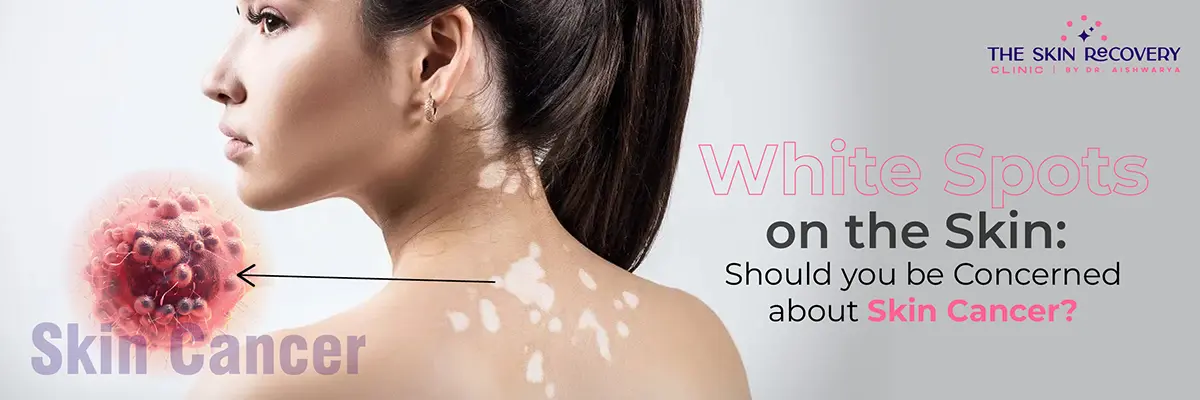
White Spots on the Skin: Should You Be Concerned About Skin Cancer?
White spots on the skin may appear due to numerous causes that may be harmless pigmentation or health related issues that may have to be treated. Although the first idea that comes into the minds of the majority of individuals when they see these spots is to expect a fungal infection or vitiligo, there are also individuals who fear that these spots might be related to cancer on the skin. The fact remains that the majority of the white spots on skin are not cancer. Nevertheless, it is crucial to know the cause since there may be some skin changes that are indicative of a condition requiring medical intervention. In case the dots are white and continue to multiply, alter their appearance or other symptoms are reported, it is more appropriate to consult with a dermatologist in order to make the right diagnosis and to start treatment as soon as possible.
What Causes White Spots on the Skin?
Colouration of skin, among other tissues, is caused by melanin (pigment) which the cells (melanocytes) produce. Light spots or white spots might develop when the production of melanin is reduced or when melanocytes are destroyed. These spots may have different looks depending on the cause.
Small white spots on skin are attributed to several common conditions such as fungal infections, vitiligo, pityriasis alba, post-inflammatory hypopigmentation, and skin changes caused by sun. White patches occur following an injury, rash or skin inflammation in certain situations. Pigment production also is susceptible of autoimmune disorders which results in observable alterations in the skin colour.
The area, the shape, and location of the spots as well as their progression provide important clues about the underlying condition. That is why the white patches can and most of the time have to be evaluated by a professional when they become persistent or even deteriorate.
Can White Spots Be a Sign of Skin Cancer?
Cancer white spots on skin are the information some patients seek when they are worried that an odd patch might be the initial sign of skin cancer. Although skin cancer is not the most prevalent reason to cause white patches, some types of skin cancer can sometimes appear as white lesions or pale.
There are other instances where basal cell carcinoma can present as scar like white spots which will increase in size with time. Such lesions can appear smooth, waxy or even a little shiny and sometimes can be confused with normal skin discoloration. Squamous cell carcinoma may also have some occasions of altering skin texture or colour, but rather with red, rough and scaly spots.
Warning signs that require medical attention include:
- A white patch that continues to grow over time
- Changes in shape, texture, or colour
- Persistent itching, bleeding, or crusting
- A lesion that does not heal after several weeks
- A spot that appears different from the surrounding skin
Although most white spot on skin concerns are related to benign conditions, a dermatologist could decide whether the investigation demands further effort.
Understanding White Spots on the Face
Face is one of the most commonly affected area where pigmentation changes can be observed. Facial appearance is an important aspect of self-confidence; therefore, most individuals opt to treat white spots on face and white patches on face immediately they appear.
Vitiligo
Vitiligo is a long-term disease, which makes pigment-producing cells be attacked by the immune system. This makes the appearances of white spots highly delineated and they tend to be surrounding the eyes, lips, nose and other parts of the face. The disease is not infectious and it does not worsen the risk of cancer, but early disease management can be beneficial in delaying the disease.
Pityriasis Alba
Pityriasis alba is extremely prevalent both in children and young adults. It leaves it slightly scaly, lighter spots which are more noticeable after being exposed to sunlight due to the rest of the skin to tan whilst the affected site remains light. These white skin patches on face actually are usually harmless and tend to improve over time.
Sun Damage and Pigment Loss
Sun exposure could lead to uneven pigmentation, and face white spots, over a period of years. UV damage impacts the melanocyte functioning that in some cases leaves an area of the skin lighter than the rest.
Can a Fungal Infection Cause White Spots?
Yes. Tinea versicolor is a type of fungal infection that causes white spots most frequently. The disease is brought about by the over-proliferation of naturally occurring yeast on the skin which disturbs the healthy pigmentation.
A fungal infection white dag on skin can look on the face, neck, chest, shoulders or back. These patches can be lightened in comparison to the surrounding skin and can be scaled. Fungal infections also become more frequent in cases of humid or in seasons of warmer weather because of additional sweat and moisture of the skin.
Luckily, most fungal treatment is effective when the diagnosis has been made.
Why Do White Spots Appear on the Neck?
Many individuals notice white spots on neck or white patches on neck and wonder whether whether this is some exposure to sun, an infection or an auto immune disease. The neck is commonly exposed to the sun and other environmental elements attacking it, hence it is susceptible to the pigmentation changes.
Common causes include:
|
Condition |
Typical Characteristics |
|---|---|
|
Vitiligo |
Smooth, clearly defined white patches |
|
Fungal Infection |
Light patches with mild scaling |
|
Post-inflammatory Hypopigmentation |
Pigment loss following irritation or rash |
|
Sun Damage |
Uneven pigmentation and colour variation |
Since many conditions may have similar symptoms a clinical examination should be undertaken in order to determine the exact cause.
Are Tiny White Spots on Skin Dangerous?
Not necessarily. Numerous instances of tiny white spots on skin are related to aging and prolonged sun exposure. The multiple small spots of white skin on the arms, legs, and other areas exposed to the sun are commonly caused by a condition known as idiopathic guttate hypomelanosis.
These are not much harmful and do not need treatment. Nevertheless, in case the spots spread quickly, are symptomatic, or accompanied by other skin changes, a dermatologist is supposed to examine them, to rule out the underlying conditions.
When Should You Seek Medical Advice?
Although most white spots do not require medical attention, there are cases that require consideration by professionals. Any white patch that is persistent, expanding or with any abnormal symptoms should be evaluated by a dermatologist.
You should seek medical advice if:
- White patches continue to spread
- The spots change in texture or appearance
- There is itching, pain, or bleeding
- Over-the-counter treatments do not help
- You have a personal or family history of skin cancer
Early diagnosis will help get a feeling of reassurance and to determine the best form of treatment.
Conclusion
Most white spots on skin,white spot on face, and white patches on face are caused by non cancerous conditions such as vitiligo, fungal infections, sun damage or post-inflammatory pigment changes. Yet, any continuous or altering skin lesion needs to be assessed by a professionally qualified dermatologist. A professional diagnosis does not just eliminate such important signs like skin cancer but also assists in designing a custom-made treatment program that will aid in the long-term wellbeing of the skin and self-esteem.

 Gauri Sharma
 Gargi Mohanty
 Dr. Tapas Mitra
 Ruhan Kumar
 Satya Pattnaik
